



The rise of online auctions in the recent digital era has become the harbinger of this new era, as businesses are shifted to a whole new level. The most popular of these online marts, however, have been those that have specialized in the sale and purchase of all kinds of goods, both rare and ordinary. Along with automobiles and accessories to jewels and clothes, online auctions have been a huge driving factor in the modern economy.
In this cut-throat competition, Apps such as HiBid have emerged as leaders setting higher benchmarks for creating feature-enriched, user-friendly auction platforms.
So, if you want to create a web-based auction system or an online auction software, it is easy to understand its key requirements and the features that will guide you in developing a high-level web-based auction system just like HiBid.
What exactly is auction software??

Well, in simple language, it is a simple digital platform that allows you to perform the auctions online. The entire bidding process is executed digitally.
Therefore, a system or software specifically designed for facilitating various types of auctions like reverse, silent, or online bidding is known as auction software. Such e-auction software authorizes the users to list the items, manage the live auctions, as well as enable the buyers to bid seamlessly. HiBid is the best example of such software that integrates various interactive features like time bidding, inventory management, and user-friendly interfaces.
Such online bidding software or auction house software has only one main objective, which is to create a user-friendly platform for both buyers and sellers.
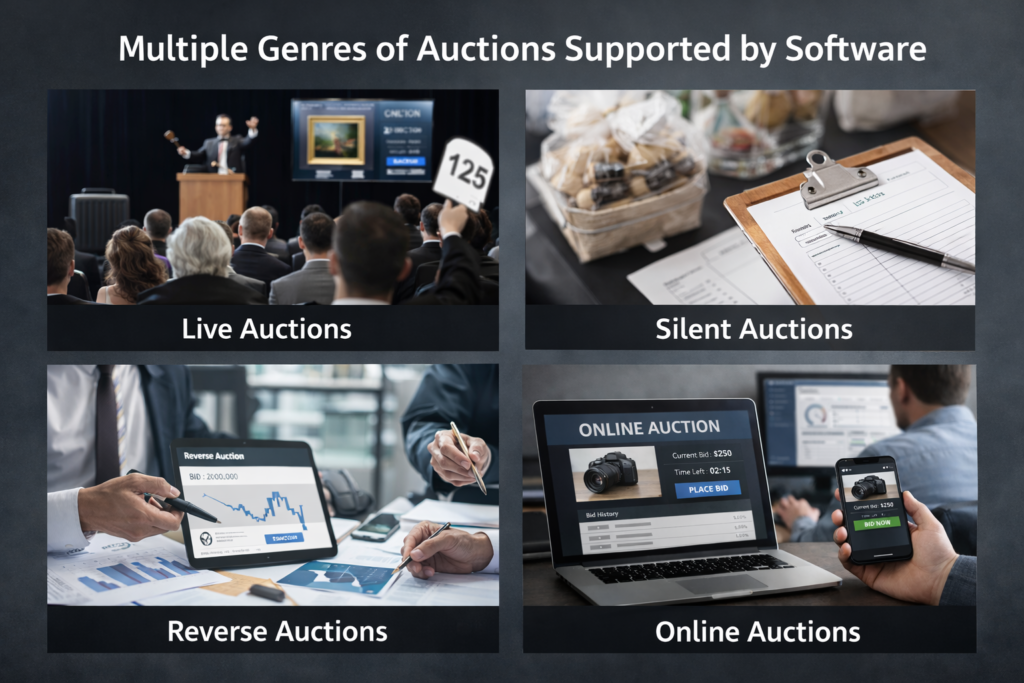
Multiple genres of auctions supported by Software
1. Live Auctions
As the name suggests, these auctions take place in real time. The bidders can participate in these auctions by remaining physically present or remotely if they are held online. Features like live streaming, real-time bidding, and countdown timers are vital for such auctions.
2. Silent Auctions
In this type of auction, all the bidders submit their bidding privately, without having any idea about others’ bids. This type of auction usually takes place at charity or fund-raising events as these require a silent auction platform with robust privacy controls.
3. Reverse Auctions
Yes. You guessed it right from the name. The auction process is reversed and the sellers compete to offer the lowest price for a service or product. Well, the sellers compete to win the business while the buyer is in control. It is quite popular with procurement as it requires specialized reverse auction software.
4. Online Auctions
These auctions take place entirely online. Consider a virtual marketplace where buyers and sellers connect online. Feature elements such as bidding automation, notifications, and real-time updates are associated with these auctions.
By defining the type of auction(s) you wish to support, you can better align your platform’s features and architecture.
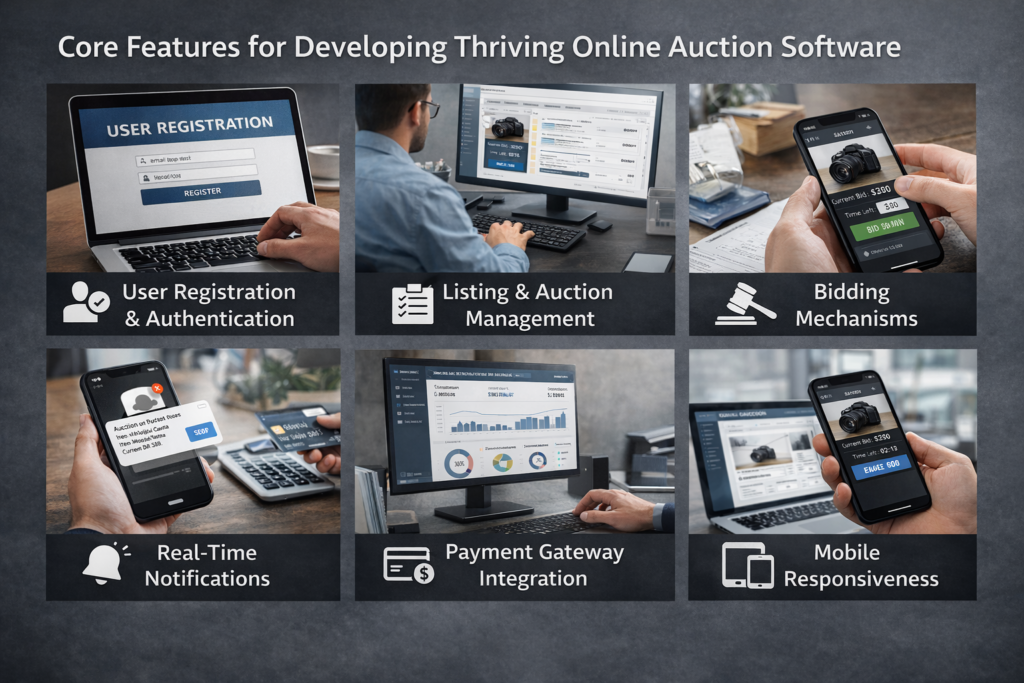
For developing thriving online auction software, knowledge about the core features required is vital:
1. User Registration and Authentication:
- Safe and secured login that allows all buyers and sellers to login securely by incorporating OTP verification, social network integration, and email-based authentication.
- Restricted access depending on the user roles by implementing Role-based access control (RBAC), which will facilitate the buyer to bid and sellers to manage the listings.
2. Listing and Auction Management
- Assimilate the essential tools that permit the sellers to upload product details, set reserves, and manage inventory easily.
- Technical features such as batch uploads enable the listing of multiple items simultaneously and automated auction scheduling assures smooth auction process.
3. Bidding Mechanisms
- Support a variety of auctions like live, silent, and reverse auction types.
- Equip the users with proxy bidding options for automating the bids within user-defined limits.
4. Real-Time Notifications
- Notify the users by enabling instant updates on their bidding activity, auction closings as well as payment confirmations.
- Keep the users informed about the latest updates through SMS, email, and push notifications.
5. Payment Gateway Integration
- Secure payment gateways like PayPal, Stripe, or Square ensure reliable transactions.
- Support multiple currencies and diverse payment options such as credit cards and digital wallets.
6. Admin Dashboard
- Allow the administrators to manage users, oversee the transactions, and generate reports.
- Integrate various tools for resolving disputes and monitoring auction activity.
7. Search and Filter Options
- Advanced search functionality with filters for categories, price ranges, and locations.
8. Mobile Responsiveness
- Ensure a seamless experience across desktops, tablets, and smartphones.
By integrating these features, you can create a custom auction software solution that meets user expectations.
7 Simple Steps to Develop Auction Software Like HiBid
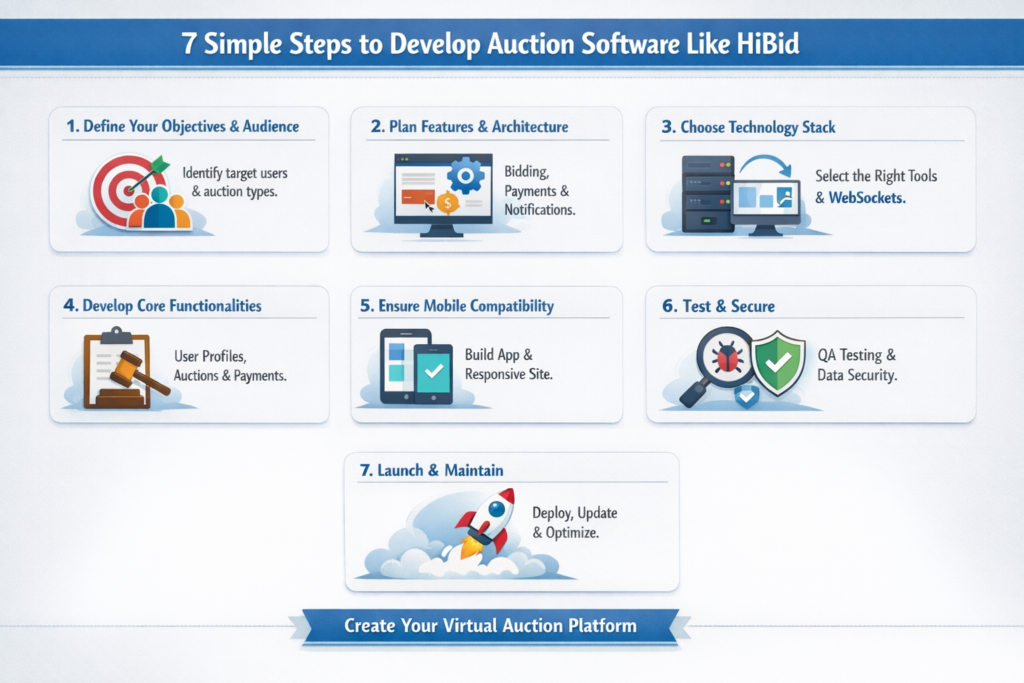
Developing a platform like HiBid requires strategic planning and execution.
Follow the below-mentioned simple steps and create your virtual auction platform:
1. Define Your Objectives and target audience
- Do the analyses of your targeted users whether they are auction houses, businesses, or any individual sellers.
- Determine the types of auctions that will support your platform like live, silent, reverse, or all three.
2. Exemplary Features and solid Architecture
- Enlist some of the essential features, including the bidding mechanisms, payment integration, and real-time notifications for your creating the best live auction software.
- Try to adopt a modular structure for online bidding software so that it supports scalability and efficient updates effortlessly.
3. Select the Right Technology Stack
- Choose a stack that aligns with your performance, scalability, and budget goals.
- For real-time interactions, consider integrating WebSockets in your bidding sites.
4. Develop the Core Functionalities
- Features such as user registration, auction management, and payment processing must be integrated.
- An interactive seller dashboard for management of the listings and tracking the bids.
5. Ensure Mobile Compatibility
- A dedicated mobile app and a well-responsive web design compatible with various devices will boost your customer engagement.
6. Test Thoroughly
- Thorough testing for individual components as well as stress testing for high-traffic scenarios must be conducted.
- Enable robust security features for protecting the data against unauthorized access and fraud.
7. Launch and Maintain the Platform
- Deploy your platform on a reliable and secure cloud service like AWS.
- Don’t forget to update the platform regularly with new features, security patches, and performance optimizations.
Let’s understand the Technology Stack behind online bidding software
A robust technology stack is the backbone of any successful online auction platform.
Here’s a quick recommendation about the stack:
Frontend Development
- HTML5 & CSS3: For enabling the web pages with semantic structure and visually appealing style.
- JavaScript: For enabling interactivity, like dynamic updates and bid placements.
- Frameworks: Utilise React.js, Vue.js, or Angular for fast and quick responsive interfaces.
Backend Development
- PHP with Laravel: Oversees the server-side operations while ensuring security and managing the API’s communication.
- Python with Django: Ideal for creating quick, efficient, scalable, and data-driven websites.
- Node.js: Essential for supporting real-time updates through WebSocket connections.
Database Management
- MySQL or PostgreSQL: For efficient storage of structured data like bids, user profiles, and transactions.
- MongoDB: For efficient management of unstructured data like images or logs.
Real-Time Functionality
- WebSockets: It empowers the platform with real-time bid updates and notifications.
- Firebase: It provides real-time database features for smaller applications.
Payment Gateways
- Deploy trusted options like Stripe, PayPal, or Razorpay for secure transactions.
Cloud Hosting
- Providers like AWS, Google Cloud, or Microsoft Azure will ensure high performance and scalability.
Mobile Development
- For enabling cross-platform app development, utilize frameworks like Flutter or React Native.
Security Protocols
- Use SSL/TLS encryption for secured data transmission.
- Implement two-factor authentication (2FA) for user accounts.
Why Partner with an Auction Software Company?
Well, an association with an experienced auction software company will ensure:
- Expertise: Leverage their knowledge for crafting web auction software to meet your needs.
- Customization: Get a platform that is tailored specifically to fulfill your business goals.
- Support: Receive ongoing maintenance and updates post-launch.
Building auction software like HiBid indeed requires a combination of technical expertise with a deep understanding of user needs. By emphasizing robust features, a powerful tech stack, and future-proofing your platform, you can create a standout online auction system that delivers exceptional value.
Where to get help from??
At Cyblance we have experts that specialize in developing custom auction software tailored just for your business needs. We create leveraging advanced technologies and user-centric designs that stand out in the competitive market.
Whether you require a simple online auction system or a feature-rich platform, partnering with experienced developers of Cyblance will ensure a seamless development process and a high-quality end product.
Don’t miss out on the opportunity to work with us.
Contact Cyblance today. We are here for your help.