

Not every auction needs a countdown clock, a bid ticker, and a room full of paddles in the air. Some of the highest-stakes transactions in the world, including government contracts, real estate offers, wholesale liquidation lots, and charity fundraisers, rely on privacy instead of visibility. This is the world of sealed-bid and silent auctions. Organizations choose this auction model because it protects bid confidentiality, promotes fairness, and reduces the risk of pricing manipulation. In 2026, more platforms across nonprofit events, B2B procurement, and collectables are being asked to support this format natively.
A sealed-bid (or “silent”) auction is an auction format where every participant submits one confidential bid without seeing competing offers. Each bidder submits one private offer, with no visibility into what anyone else has bid, and no indication of where they stand until a defined reveal moment, often the auction’s close.
This guide discusses the system design choices, pricing methodologies, protective mechanisms, and user interface strategies that differentiate a reliable sealed-bid system from a delicate one.
Sealed-Bid Auctions vs. Live Auctions: The Core Difference
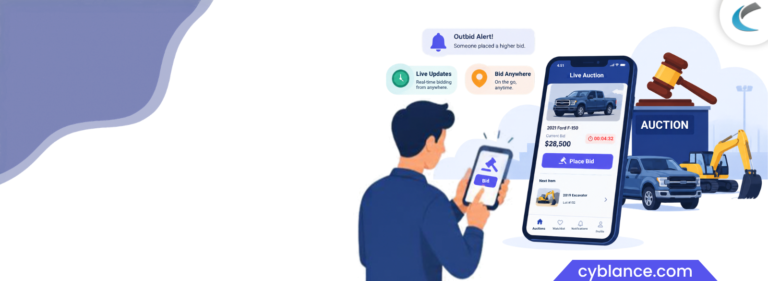
In a live or open-outcry auction, every participant sees the current highest bid and reacts to it in real time. The entire mechanic depends on visibility for driving competitive escalation.
A sealed-bid (or “silent”) auction inverts that logic entirely. Each bidder submits one private offer, with no visibility into what anyone else has bid, and no indication of where they stand until a defined reveal moment, often the auction’s close. Nobody, including administrators in a well-built system, should be able to see bid values before that moment.
This kind of arrangement is typical of:
- Charity events and fundraising for nonprofits, where silent auction tables operate side by side with the live auctions
- Government and public-sector procurement, where sealed bidding is generally a legal mandate to ensure fairness and auditability
- Real estate offers, particularly in competitive markets or estate sales
- B2B contract and wholesale bidding, where buyers don’t want competitors to reverse-engineer their pricing strategy
- Collectibles and estate liquidation, where sellers want to avoid the psychological anchoring effect of a visible bid ladder
Because the value proposition is trust and fairness rather than excitement and momentum, the underlying sealed bid system architecture has to prioritize things a live auction platform can mostly ignore: encryption at rest, access control down to the admin level, and provable integrity of timestamps.
1. Bid Concealment Architecture: Encrypting What Even You Shouldn’t See
The single most important design principle in silent auction software development is this: if a bid can be read before the reveal moment, the system is broken, regardless of who reads it.
That means concealment can’t just be a UI restriction (“we simply don’t display it to other bidders”). It needs to be enforced at the data layer.
Practical implementation patterns:
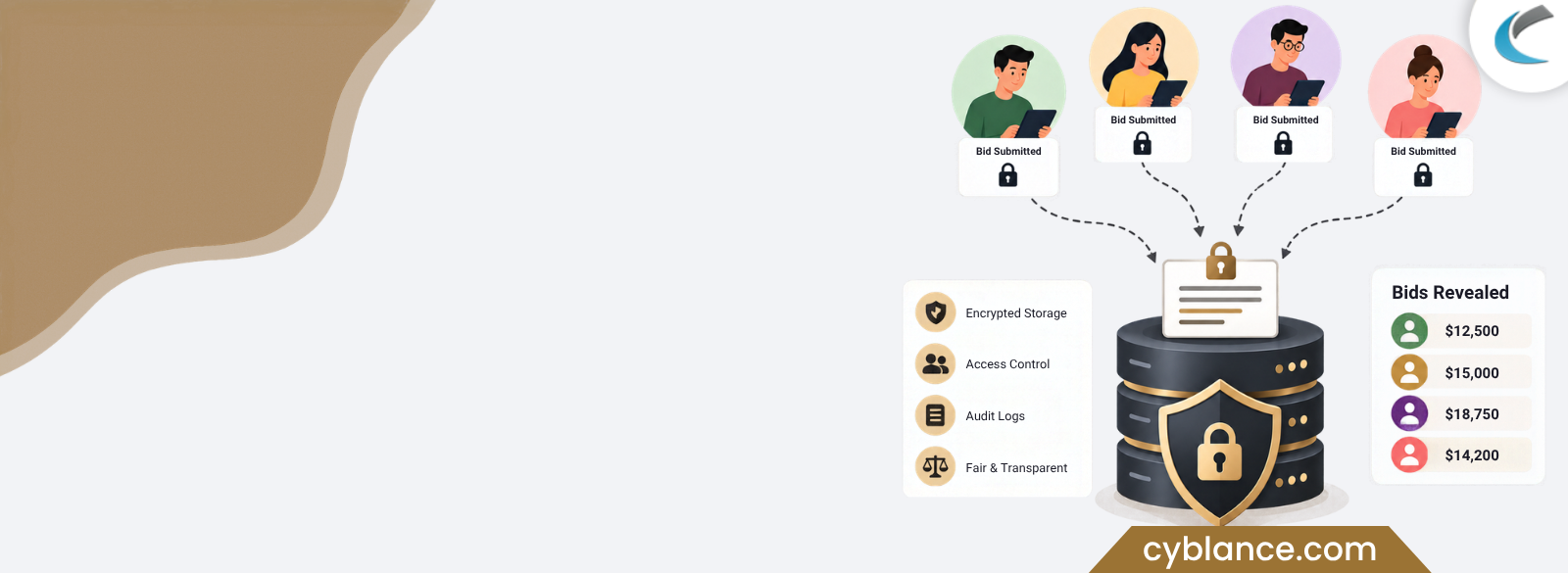
- Encrypted bid storage at submission – Bid values should be encrypted client-side or immediately on ingest, using a key that is not accessible to application-layer queries until the reveal window opens. Symmetric encryption with a time-locked or admin-multisig-controlled key is a common pattern; some platforms use asymmetric encryption where bids are encrypted with a public key and only decrypted with a private key released at close.
- Hashing for integrity, encryption for confidentiality – Many systems combine both: a cryptographic hash of the bid (plus a nonce and timestamp) is stored openly to later prove a bid wasn’t altered, while the actual bid amount stays encrypted. This gives you tamper evidence without exposing values.
- Database-level access control – Row-level security policies should ensure that even a superuser database query returns ciphertext, not plaintext, for bid amount fields. Application service accounts used for day-to-day admin functions (managing listings, bidders, notifications) should have zero read access to the bid-value columns before reveal; only a separate, tightly scoped “reveal service” should hold decryption rights, and only after the close event fires.
- Audit logging on every access attempt – Every read, write, or decryption-key request against the bids table should be logged immutably, including failed or denied attempts. This is what lets you prove, after the fact, that no one peeked early. For procurement and real estate use cases, this audit trail is often a compliance requirement, not a nice-to-have.
- Separation of duties – The person or service configuring the auction (setting close time, minimum bid, reserve price) should not be the same credential that holds decryption authority. This stops a single compromised admin from totally exposing the auction.
This is the level at which sealed-bid platforms differentiate themselves most significantly from regular e-commerce or live-auction stacks; you are creating a system which is sealed against even one’s own operators in addition to just the external bad actors.
2. Reveal Mechanism Design: The Moment Everything Unlocks
The sealed bid reveal mechanism is the dramatic centrepiece of the whole system, and it has to be engineered as a single atomic event, not a gradual unveiling.
Key design elements:
- Timed, server-authoritative close – The auction close time should be enforced server-side against a synchronized clock, not client devices. Once the close timestamp passes, bid submission endpoints must reject new writes immediately; there should be no race condition window between “close triggered” and “submissions blocked.”
- Simultaneous decryption – All bids should decrypt in a single batch operation once the close event fires, rather than one-by-one as an admin clicks through them. This prevents any possibility of an early decrypted bid influencing decisions about others still pending.
- Deterministic ranking logic – Once decrypted, bids are sorted by value according to the platform’s pricing model (see below), and the winner is computed programmatically, not manually selected, to remove any ambiguity or appearance of favouritism.
- Tie-break handling – Ties are common in round-number bidding (a classic issue in charity silent auctions, where people bid in $25 increments). Some typical tie-break rules are: The person who submitted the earliest timestamp shall be considered the winner; alternatively, a second sealed “best and final” round can be conducted; finally, a random draw that is cryptographically seeded can be used. Regardless of the rule you decide on, make sure to mention it explicitly in the bidding terms before the start of bidding; choosing a tie-break method after the fact is a risk in terms of fairness and legality, particularly in procurement situations.
- Immutable reveal record – Once bids are decrypted and ranked, that snapshot should be written to an append-only log so the result can be verified later, even if someone contests the outcome.
3. Pricing Models: First-Price vs. Second-Price Sealed Bid
Choosing a pricing model is a strategic decision, not just a configuration toggle. The right model depends on your auction objectives, regulatory requirements, and bidder behaviour. It is also one of the most frequently asked questions in sealed bid auction platform development projects.
First-price sealed bid: The highest bidder wins and pays exactly what they bid. This is the simplest model, most intuitive for casual users, and the standard choice for charity silent auctions, estate sales, and most real estate offer processes. Its downside: bidders are incentivised to “shade” their bids below their true valuation to avoid overpaying, since there’s no feedback loop to correct an overly cautious bid.
Second-price sealed bid (Vickrey auction): Second-price sealed bid (Vickrey auction): The one who places the highest bid is the winner; however, they pay the price equal to the second-highest bid. From an economics point of view, this is the simpler and more correct model: game theory proves that a bidder’s best move is to reveal their true value since overbidding won’t give them the advantage of winning at a lower price, and underbidding will only result in their losing even when the other bid is less than their true value.
Why do platforms choose one over the other:
| Factor | First-Price | Second-Price (Vickrey) |
|---|---|---|
| User understanding | Simple, intuitive | Requires more bidder education |
| Bidding behavior | Bidders shade bids downward | Bidders tend to bid true value |
| Seller revenue predictability | Winning bid = final price (clear) | The final price is often lower than the winning bid |
| Best fit | Charity events, retail-style auctions | Procurement, high-value B2B, some real estate contexts |
| Trust requirement | Lower, logic is self-evident | Higher must prove the second-price calculation is correct and untampered |
If you support second-price bidding, transparency about how the final price was derived matters enormously. Pair it with the audit logging and immutable reveal record described above, so winning bidders can trust the number they’re being asked to pay.
4. Anti-Manipulation Safeguards
Sealed-bid systems face a different threat model than live auctions, but it’s no less serious.
- Bid sniping and late-submission edge cases. Sealed-bid auction formats are, by design, immune to sniping, unlike the live auction, where the item is bought at the final second. However, clock-based ties occurring very close to the end time still require proper attention. You can use the server time to determine the bids, line up the waiting time for the last few-second bids instead of just dropping them, and you should clarify whether the bid submitted at the exact time of the closing is valid or not explicitly.
- Insider access prevention. As covered above, this is primarily a data architecture problem: encrypted storage, scoped decryption keys, and audit logs. But it also has a process dimension, background checks and role-based access reviews for any staff with infrastructure-level database access, since the technical safeguards only work if operational discipline matches them.
- Immutable bid timestamps. Every bid submission should be timestamped and hashed in a way that can’t be altered after the fact; some platforms anchor these hashes to a public blockchain or a trusted timestamping authority (RFC 3161) for procurement contexts where legal disputes are more likely.
- Rate limiting and duplicate-account detection. Prevent a single bidder from creating multiple accounts to submit shill bids or test the waters; this matters especially in B2B and collectables contexts, where bid inflation can be lucrative.
5. UX Considerations: Designing for “Blind” Confidence
The user experience of a sealed-bid platform has to work hard to build trust without the reassurance of visible competition. Key silent auction app features include:
- No live bid counter, no “current highest” display – This is the defining UX constraint, and it needs to be communicated proactively, not just enforced by omission. A simple banner like “This is a blind auction, bid amounts are not visible until close” avoids confusion or the assumption that the platform is broken.
- Minimum bid increments – Even without visibility into competing bids, setting a minimum increment relative to the item’s starting price helps prevent trivial or joke bids and gives bidders a sense of scale.
- Clear bid confirmation flows – Since bidders can’t revise their strategy based on competitor behaviour, the submission flow should include a deliberate confirmation step (“You are about to submit a sealed bid of $X, this cannot be seen or changed after submission… unless your platform supports bid editing before close”).
- Editable bids before close – Many platforms allow bidders to revise their sealed bid any number of times before the close deadline, with only the final submission counting. This will lessen the stress on the bidders about making a commitment at the earliest stage.
- Post-close notification and reveal UI – Immediately after the auction ends, display the results in an easy-to-understand manner: notify winners, send “you were outbid” messages (without disclosing the winning price unless policy permits), and have a neat reveal screen showing final standings for public sealed-bid formats like government procurement, where post-event transparency is typically required.
6. Use-Case Fit: Where Sealed-Bid Beats Live Bidding
Sealed-bid methods are not intended to replace live auctions everywhere; they are just the right tool for certain situations:
- Charity galas – Silent auction tables relieve social pressure and allow more items to be sold at the same time without having an auctioneer for each one.
- Estate and asset liquidation – Sellers often prefer sealed bids to avoid the appearance of orchestrated bidding wars on sentimental or high-value items.
- Government and corporate procurement – Sealed bidding is frequently a compliance requirement, since it prevents vendors from adjusting quotes based on competitors’ pricing.
- Real estate offers – Sealed “best and final” rounds are increasingly common in competitive housing markets, giving sellers maximum offers without a public bidding spectacle.
- B2B wholesale lots – Buyers avoid tipping off competitors to their sourcing strategy or price ceiling, which live bidding would expose.
Building It Right
At its core, a sealed-bid auction platform depends heavily on trust; delegates must be certain their bids are properly concealed, sellers must be sure the winning bidder is authentic, and both parties require a record in case things come into question. Besides flashy UI, that’s why real engineering investment is in the unglamorous plumbing: encrypted bid storage, access-controlled databases, atomic reveal logic, and immutable logs.
It doesn’t matter whether the blind bidding platform is a module added to an existing event-management product, a dedicated sealed bid auction platform development solution for procurement, or a real estate offer system. Every sealed-bid platform should be designed so that bid confidentiality is enforced by architecture, not policy, helping organizations build trust, meet compliance requirements, and deliver a fair bidding experience.