


Sealed, Delivered, Sold: Building a Discreet Sealed-Bid Auction Engine for a Luxury Collector-Car Dealer
A boutique collector-car dealer on the South Carolina coast wanted to sell six-figure classics the way the world’s top auction houses do: quietly, elegantly and without a price tag shouting from the rooftops. We turned that wish into a fully working sealed-bid auction engine, delivered across three milestones, shaped by weekly feedback, and dressed in a look that feels unmistakably Lowcountry.
Chapter 1: The Starting Line
Our client deals in the kind of cars that come with a story. Think 1950s and 1960s classics, restored with care, where a folder of original paperwork can be worth as much as a fresh coat of paint. The average hammer price? Somewhere around USD 250,000 per car.
There was just one catch. The business had no auction platform at all. Sales and events ran the old-fashioned way: phone calls, spreadsheets, emails and a lot of personal follow-up. That works when you sell a handful of cars to people you already know. It does not work when you want to become the go-to sales channel for serious collectors across the country.
The pressure was real, too. A flagship auction was penciled in for the autumn, tied to a prestigious concours event the client sponsors. The public site needed to be live weeks ahead so buyers could browse the lots. In the client’s own words on our first call, time was not their friend.
The challenges, in short:
- No system, no scale. Every event was run by hand, with nothing to capture bidders, bids or results.
- A buyer base that values privacy. High-end collectors do not want the world to know what they paid, because it haunts them when they resell.
- Trust has to come first. Every bidder had to be identified and qualified with proof of funds before touching a bid button.
- A hard deadline. A marquee event on the calendar and a first impression that could only be made once.
Chapter 2: The Vision (World-Class, With a Southern Accent)
The client walked in with a crystal-clear reference point. He had been bidding on the sealed-bid auctions of one of the world’s most renowned collector-car auction houses, screenshots and all. His brief was refreshingly direct: give us that experience, then help us make it our own.
What made that experience special was not flashy features. It was restraint:
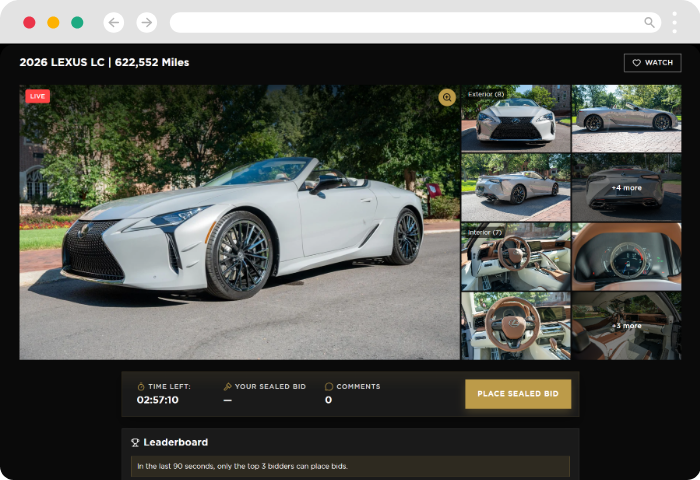
- Sealed bids. You see your own bid. Nobody else does. No endless $1,000 back-and-forth that wastes everyone’s evening.
- A leaderboard with a pulse. Bidders appear only as coded numbers, with a hint of how recently each one bid. The client also pictured the leaderboard as a live, animated race: rivals jostling for position as the clock winds down, without a single dollar figure ever showing. The drama comes from rank, not price.
- A tense, fair finish. In the final 90 seconds, only the top three bidders stay in the game.
- Quiet results. When the hammer falls, the world learns only that the lot has sold. Not who bought it, and not for how much.
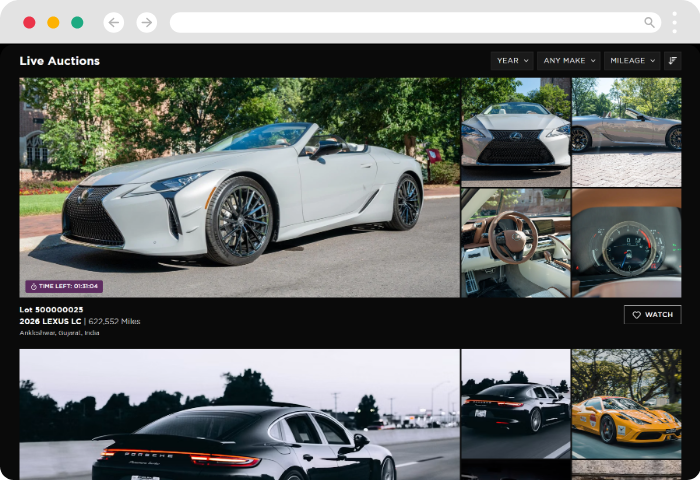
- One car, one stage. Each lot page is devoted to a single automobile, with big, beautiful photography and room for its story.
And then there was the local flavor. The client’s brand lives in the Lowcountry: the coastal stretch between Charleston and Savannah, with its marshlands, rivers, beaches and live oaks draped in Spanish moss. The platform had to feel like it belonged there, not like a template with a new logo slapped on top.
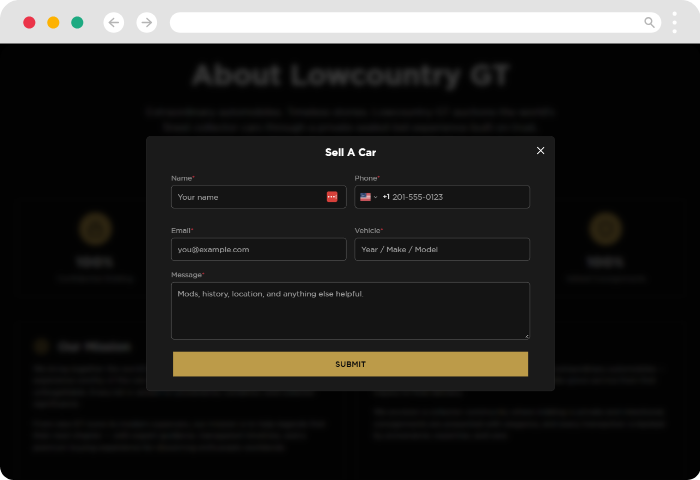
One more thing: the client already had a separate team building his main company website. He did not need another homepage. He needed an auction engine that his site’s Auctions menu could hand visitors straight into.
Chapter 3: Why Cyblance Got the Keys
The client was not sure whether he needed something fully custom or something off the shelf. As it turned out, the answer was “a bit of both”, which happens to be exactly how we work.
- A running start, not a blank page. Our white-label auto-auction platform already covered most of the ground: storefront, VIN-powered inventory, bidder accounts, admin console, transactions and notifications. That meant our energy could go into what made this client different.
- Auction know-how, not guesswork. We have been building auction platforms for years, largely for US clients. We came to the very first call having already studied the reference site.
- Configure first, customize where it counts. As the client’s advisor put it after our demo, this looked like “more configuration and less customization”. The one big piece of new engineering was the sealed-bid engine itself.
- Speed without shortcuts. We turned the discovery call into a detailed scope of work within a day, then walked the client through it line by line two days later.
- Straight talk. The client asked for one thing above all: if something could not be done, tell him, and tell him what it would take. That promise shaped how we ran the whole project.
Chapter 4: What We Built
We delivered the platform in three milestones, each one demoed, tested and handed over before the next began.
| Milestone | What shipped |
|---|---|
| Milestone 1 (Two weeks) | Platform foundation, bidder registration and verification, inventory management with VIN auto-fill, auction management, and the auction homepage |
| Milestone 2 | Lot detail page, watchlist, fee settings, homepage refinements, lot numbers, bidder IDs and vehicle document uploads |
| Milestone 3 | The full sealed-bid bidding workflow, leaderboard, final-window logic, My Offers, Purchases, invoices and transactions |
Milestone 1 (Two weeks)
Platform foundation, bidder registration and verification, inventory management with VIN auto-fill, auction management, and the auction homepage
Milestone 2
Lot detail page, watchlist, fee settings, homepage refinements, lot numbers, bidder IDs and vehicle document uploads
Milestone 3
The full sealed-bid bidding workflow, leaderboard, final-window logic, My Offers, Purchases, invoices and transactions
The front door: an auction home worth lingering on
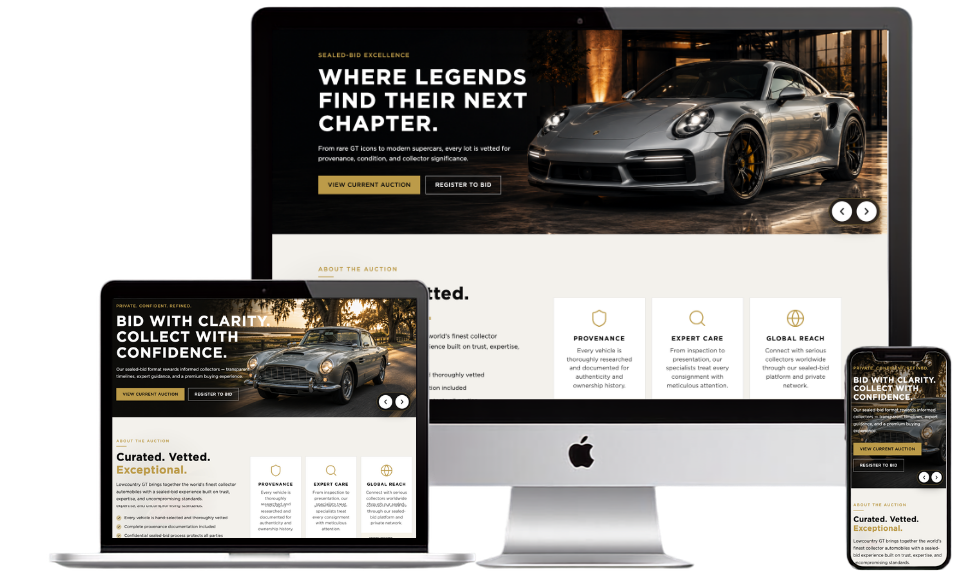
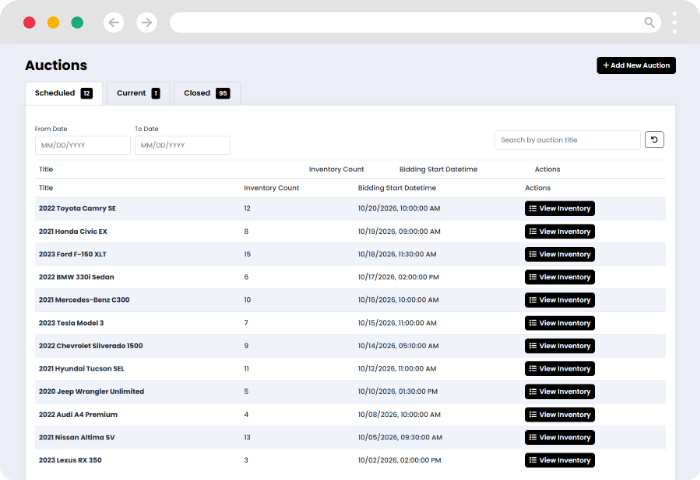
We started with wireframes before writing a line of production code. The client wanted the auction home to feel like an event, not a car lot. So we built a promotional, vertically scrolling page that spotlights one flagship auction, with a big hero carousel, bold calls to action and a dark, dramatic palette in the brand’s colors.
Visitors arrive from the Auctions link on the client’s own website, which our system sits behind on its own subdomain. Guests can admire the event and a single photo of each lot. Anything deeper nudges them to register.
The velvet rope: bidder verification
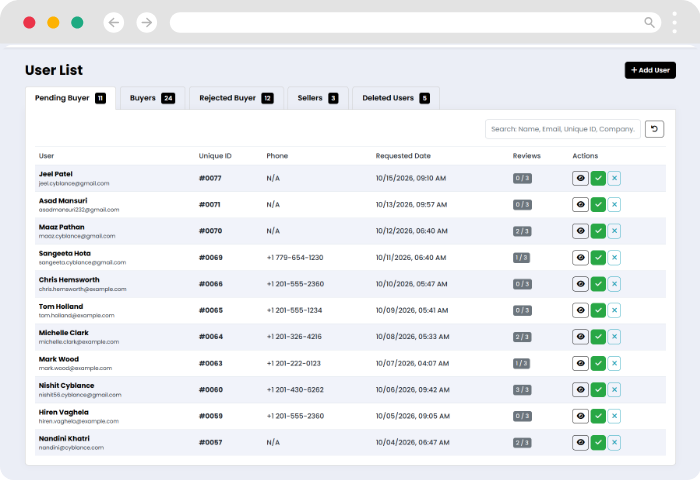
Nobody bids without being vetted. Registration captures identity and proof of funds, and each application lands in an admin queue for manual review. Approved bidders get a unique bidder number and can bid on any lot in the event without requalifying. The admin can still ask for more proof off-platform if someone gets ambitious.
The main act: the sealed-bid engine
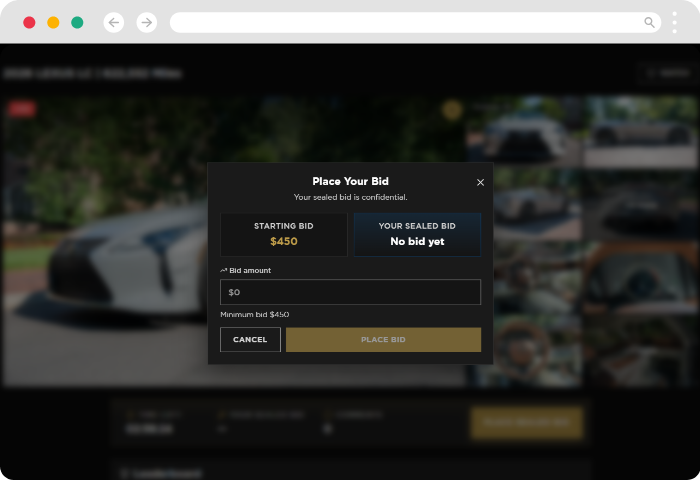
This was the one genuinely new build, and we replaced our platform’s open-bidding logic from the ground up:
- Private bids. Each bidder sees only their own amount. Bids can be raised any number of times while the auction is open.
- An anonymous leaderboard. The top five bidders appear by bidder number and rank, with “last bid” timing such as “2 hours ago”. Timing updates only when someone actually bids, never when they just peek.
- Instant feedback. Reach rank #1 and you are told on screen and by email. Get knocked down and an outbid alert follows.
- The final 90 seconds. The leaderboard narrows to the top three, a countdown animation kicks in and turns red as time runs out, and only those three can keep bidding.
- Extra time for real contenders. A new leading bid inside the final window resets the clock to 90 seconds, so nobody can snipe the win at the buzzer.
- Fair tie-breaks. Identical amounts are ranked by submission time, down to the millisecond.
- A discreet finish. At close, the lot simply shows as sold. Below-reserve results move into an On-Approval workflow for a quiet, negotiated deal.
The engine room: the admin console
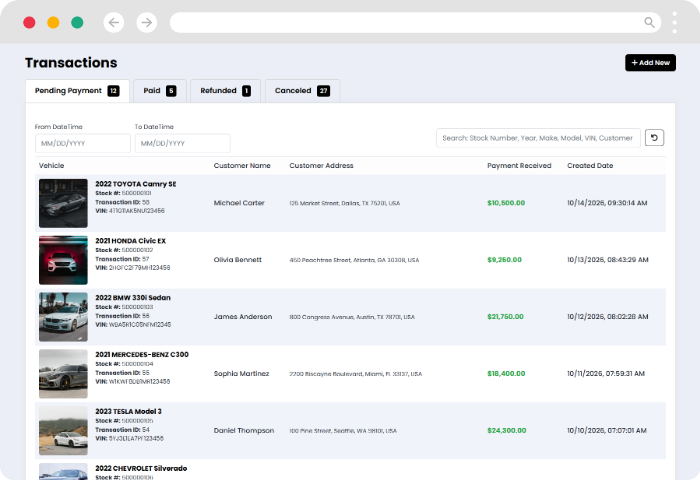
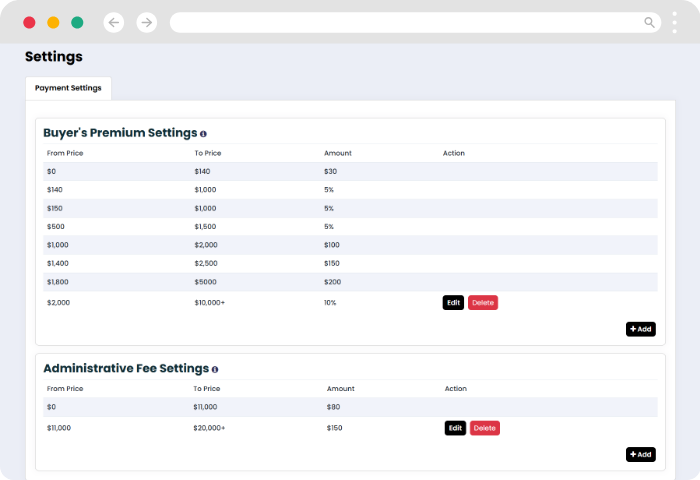
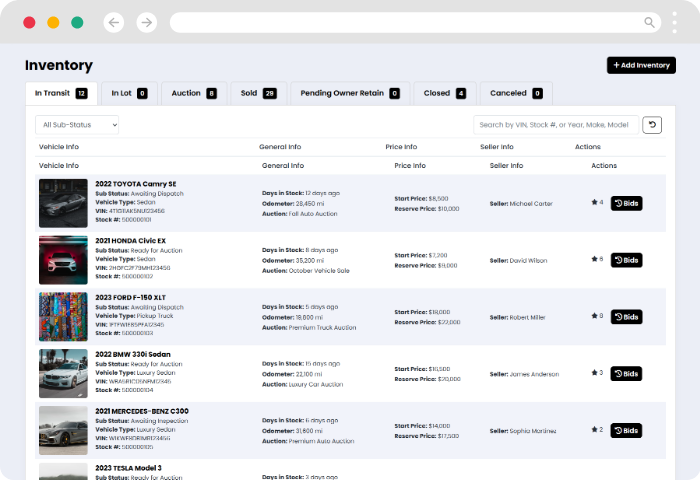
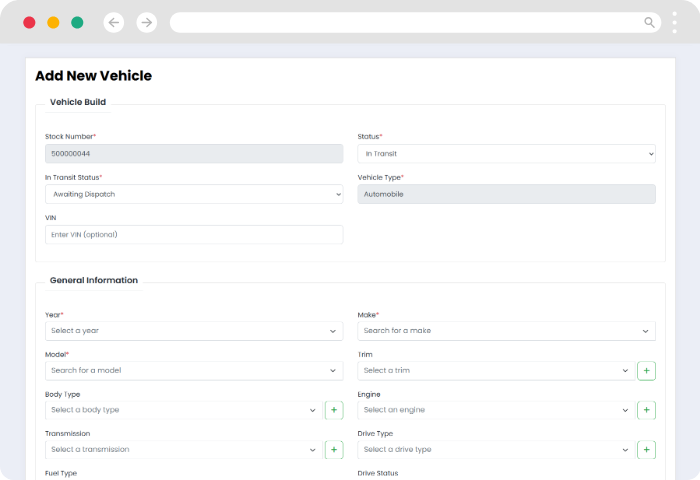
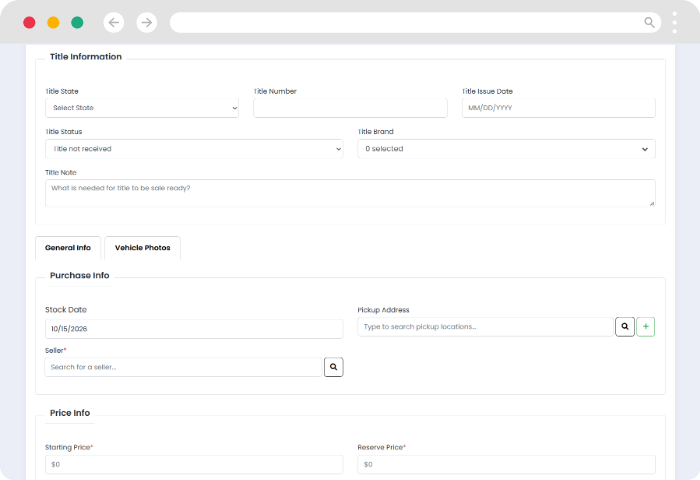
Behind the curtain, the client’s team runs everything from one console: inventory through its full lifecycle, VIN decoding, Google Maps-powered locations, categorized photo uploads, titled vehicle documents such as restoration and maintenance records, auction scheduling, full bid visibility per lot, tiered buyer’s premium settings, automatic invoices, offline payment reconciliation, refunds, user approvals and staff roles.
That bid visibility turned out to be a quiet superpower. In a sealed-bid world, bidders see only their own numbers while the auctioneer sees the whole market. The client spotted the value of that data within minutes of our first demo.
Chapter 5: Build, Show, Listen, Repeat
If this project had a heartbeat, it was the weekly call. Every week we showed real progress on screen, the client clicked around, told us what felt right and what did not, and we folded that feedback into the very next sprint. Short loops, quick decisions, no surprises.
The client was candid that he was “not a technology guy”, which made him the perfect test user. If he could find his way around, so could his bidders. Here is a taste of what those sessions changed:
| What the client said | What we did |
|---|---|
| “Don’t be afraid of big fonts.” | Larger logo, larger text, bigger buttons and more breathing room across the site |
| The carousel arrows were hard to spot | Made them visible, added auto-play and swipe |
| Empty menu tabs look like “now you see it, now you don’t” | Upcoming and Past Auctions only appear once they have something to show |
| “Anonymous bidder” hides the drama | The leaderboard now shows distinct bidder numbers, so bidders can watch rivals climb |
| Buyers want the paperwork | Titled document uploads, from restoration records to delivery papers, now show on each lot |
| Condition grading isn’t how this market works | Dropped the condition report, since buyers inspect these cars themselves |
| Timer should reset when a new leader emerges in the final window | Built the 90-second reset, plus a countdown animation that builds urgency |
| Nobody bids in cents | Whole-dollar bids up to eight digits, ready for the eight-figure car one day |
Not every conversation ended in a code change, and that was the point. When the client asked about per-car fee discounts, we priced the effort honestly, and he chose a manual workaround for launch. Keeping the first release lean is what kept the timeline on track.
Chapter 6: Going Beyond the Brief
Good projects grow. Two of the client’s favorite outcomes were not in the original scope at all.
SMS alerts, because bidders live on their phones
The client noticed something from his own bidding: people check texts far faster than email, especially when they are away from a desk. Losing a car because you were on a plane is bad for the bidder and worse for the auctioneer.
So we added an SMS channel alongside email using Twilio, rather than building messaging from scratch. Bidders verify their phone number with a one-time code before they can switch SMS on. They can then get texts for watchlist reminders before an auction starts and instant outbid alerts. Failed messages are logged, not lost, and the existing email flow carries on untouched. With the Twilio integration and AWS S3 storage both now live, the platform is fully wired up.
AI backdrops with a Lowcountry soul
During one early call, the client asked about the striking background behind a car in our homepage mock-up. It was AI-generated. That small moment unlocked a big problem he had been wrestling with: great photos of every car, shot in the right setting, are slow and expensive to get, and they were holding up his main website.
We proposed a simple fix. We would create the scenery, and his design team would place the cars into it. We produced 12 high-resolution backdrops built around the Lowcountry: tidal marshes, beachfront, rivers, tall pines, and live oaks hung with Spanish moss, across different times of day and compositions. One early draft felt “a little Italian” to the client, so it was swapped out. The rest earned a verdict of “worthy of $300,000 and $400,000 automobiles”.
The result is a consistent, branded look for every car in the collection, no location shoot required.
Chapter 7: What Changed
The client went from running sales by hand to owning a proprietary auction platform built around the way his market actually buys.
| Before | After |
|---|---|
| Events run manually, with no system of record | A complete auction platform, from registration to invoice |
| Bidders qualified by phone and email | A structured, admin-approved verification queue with unique bidder numbers |
| Open bidding the client’s buyers disliked | A sealed-bid engine with private bids, an anonymous leaderboard and a discreet finish |
| Final moments open to sniping | A top-three final window with a 90-second reset on every new leading bid |
| Market insight scattered across conversations | Full bid and pricing data visible only to the auctioneer |
| Email only | Email plus verified SMS alerts |
| Car photos stalling the website | 12 branded Lowcountry backdrops ready for compositing |
A few things surprised even the client. He started seeing the platform as more than an auction tool. Soon he was talking about running “one-car auctions” as his everyday sales channel, and a prospective partner asked whether it could handle dozens of cars at once. It can: lots already run independently, each on its own clock.
The relationship changed too. A client who admitted he had been nervous about working with a team on the other side of the world ended up telling us: “You guys have earned my confidence. I don’t give it easily.” He even asked us to keep a running backlog so the team would never lose momentum.
Chapter 8: What’s Next
Phase 1 made the platform work. Phase 2 makes it audit-ready.
As the client’s business grows, a possible future under a publicly traded parent is on the horizon. That brings a new kind of scrutiny: the governance and financial-control checks associated with SOC 2, SOX, PCI and data-protection rules. The client shared a draft control matrix, we reviewed it against the current build, and together we chose to prioritize the controls that matter most at the application layer.
Phase 2 covers:
- Session security and account lockout. Idle timeouts for admins, lockout after repeated failed logins, and a self-service account recovery flow over SMS or email.
- Multi-factor authentication. On by default for admins and sensitive roles, and triggered for buyers whenever they log in from a new device or location.
- Dynamic roles and permissions. A roles screen where sensitive actions, such as reserve changes, bid retractions or payout status, can be granted one tick at a time.
- Two-person approval. A maker-checker rule for reserve overrides and payout releases, plus warnings when one role holds too much power.
- An append-only audit log. Every bid, reserve change and lot event recorded permanently, with IP and device details, and exportable for any closed lot.
- Payments through Stripe. The buyer’s premium is charged automatically to a tokenized card, while the vehicle balance arrives by wire and is tracked on the platform. No card data ever touches our servers.
- No sensitive documents on our side. Identity checks move to a dedicated verification provider and proof of funds to secure bank-linking, so the platform keeps only pass/fail results, not licenses or bank statements.
- A central activity log with alerts. One trail for logins, role changes, exports and document access, with instant notifications for the super admin.
- Vehicle history on tap (proposed). An optional CARFAX integration to attach history reports to each lot automatically.
Beyond Phase 2, the backlog is already full of good ideas: proxy bidding, seller self-service onboarding, a consignor portal, viewing appointments, market analytics and, eventually, native mobile apps.
The Final Lap
This project started with a reference site, a deadline and a very clear idea of how luxury buyers like to be treated. It ended with a sealed-bid auction engine that keeps bids private, keeps the finish fair and keeps the auctioneer firmly in the driver’s seat, all wrapped in scenery that could only come from the Lowcountry.
The real secret was not a single feature. It was the rhythm: build, show, listen and repeat, every single week. A white-label foundation bought us speed, careful customization gave the client his edge, and honest conversations kept everyone pointed at the same finish line.
The engine is built and the paint is fresh. Now we are tuning it for the long road ahead.
Planning an auction platform of your own? Whether you sell collector cars, fine art or anything worth a sealed envelope, let’s talk about what yours could look like.